Give Wood a
Second Life
Tell us what lumber you need, or what you have to sell. Your request goes to partner suppliers in our network, and a supplier that can help follows up with pricing and availability for the Houston area.
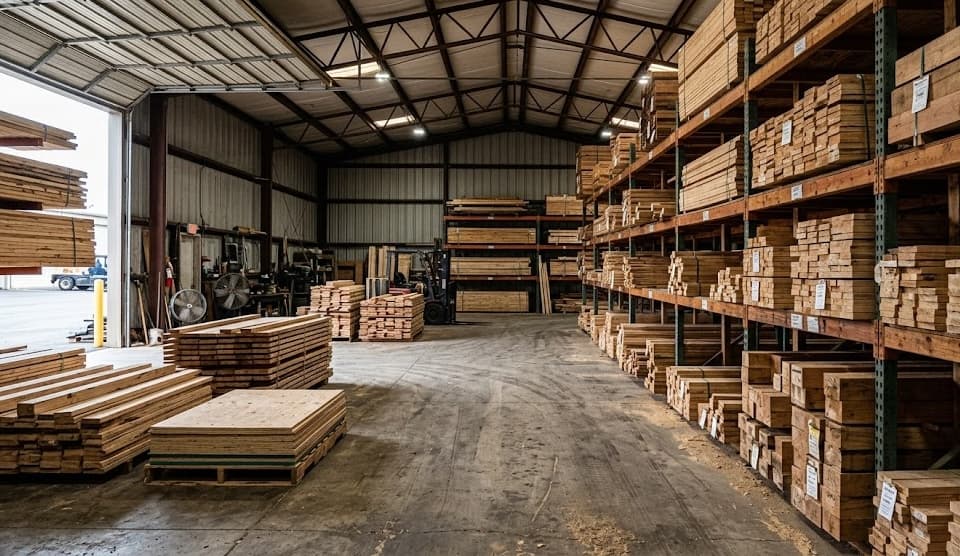
Reclaim · Reuse · Rebuild
Reclaimed and new lumber through partner suppliers
Request a Free Quote
Tell us what you need and a partner supplier will follow up. The request is free and carries no obligation.
Why Reclaimed Lumber?
Better for the planet.
Better for your project.
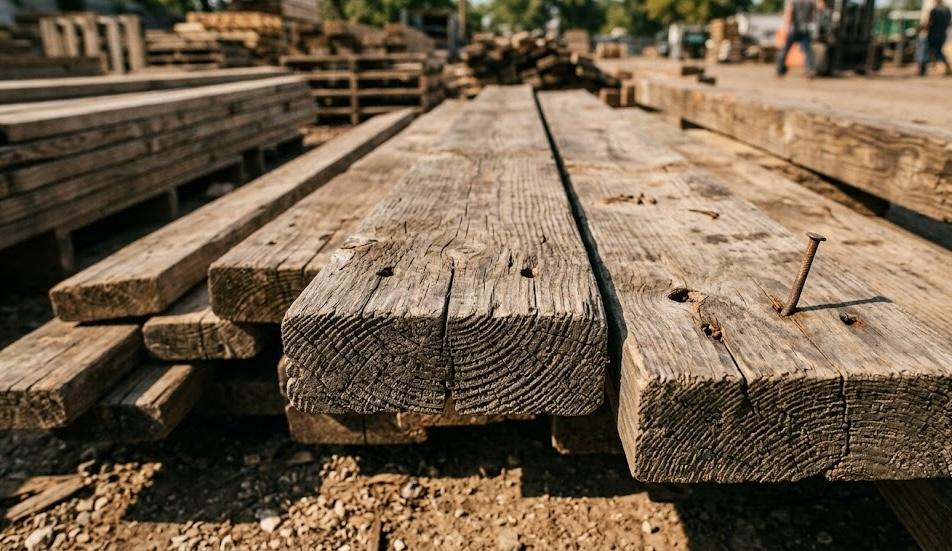
Reclaimed lumber is wood that already served a purpose in a barn, warehouse, or old house and is being put to use again. Old-growth boards often have tighter grain than wood from fast-grown plantation trees, and the patina is hard to fake. Reusing a beam also avoids cutting a new one and keeps usable wood out of the landfill. Whether it suits your project depends on species, grade, and condition, so it helps to compare it with new lumber before you buy.
A Second Use
Reused wood stays in service instead of going to a landfill.
Avoids New Cutting
Reusing a board avoids cutting a new one for the same job.
Tight Grain
Old-growth lumber often has tighter grain than fast-grown wood.
Unique Character
Natural patina, nail holes, and grain patterns that new boards don't have.
What to Expect
How Houston Lumber Works
Houston Lumber is a referral service. We don't own a yard, mill, or trucks. We connect people buying or selling lumber in the Houston area with partner suppliers in our network, and those suppliers handle the pricing, the material, and the delivery.
One Request
Instead of contacting suppliers one at a time, you describe your project once: species, dimensions, grade, quantity, and where it is going. The form is free to use and a request doesn't commit you to anything.
Matched to Partner Suppliers
Your request goes to partner suppliers in our network. Which supplier responds depends on what you asked for and on what is available in the Houston area at the time.
Buying or Selling
The same form works in both directions. If you are taking down a barn or have surplus boards or beams, you can ask whether a partner supplier is interested, and pickup can be discussed with that supplier.
Pricing by Quote
Lumber prices move with species, grade, quantity, and the market, so nothing on this site is a price. Pricing comes as a quote from the partner supplier, and you can compare it with any other offer before deciding.
Direct With the Supplier
If you go ahead, you deal directly with the partner supplier. That supplier sets the terms, delivery, and returns, so ask about them up front, along with grade stamps or moisture readings if they matter to your project.
Focused on Greater Houston
We take requests from Houston and the surrounding metro area, including Katy, Sugar Land, The Woodlands, Pearland, Pasadena, Baytown, and Galveston. Availability depends on partner suppliers.
Common Uses
Who Uses Reclaimed Lumber
Reclaimed lumber is a versatile building material, and it turns up in projects of every size, from large construction jobs to one-of-a-kind pieces. Here is where it is most often used.
Residential Construction
Homebuilders and remodelers use reclaimed lumber for flooring, accent walls, ceiling beams, mantels, and custom cabinetry. In Houston's humidity, it pays to acclimate wood indoors before installing it.
Commercial Construction
Commercial builders use structural timbers, interior cladding, and decorative elements in offices and mixed-use buildings. Structural use usually calls for an engineer's review and a check with the building department.
Restaurant & Hospitality
Restaurants, breweries, hotels, and event venues use reclaimed wood for bar tops, wall paneling, tabletops, and feature beams, where the patina gives a room warmth that new boards don't.
Historic Restoration
Restoring an older building often means matching original species and dimensions. Reclaimed boards can come closer to that than new stock, though preservation rules vary, so check them for your property.
Furniture Makers
Furniture makers and woodworkers look for reclaimed oak, walnut, heart pine, and cypress for tables, shelving, and bed frames. Tight grain and natural character marks give handmade pieces their look.
Film & Set Design
Set builders use weathered boards for period sets, rustic backdrops, and textured environments. Weathered finishes are hard to reproduce quickly with new wood.
Landscaping
Landscape designers use reclaimed timbers in raised beds, pergolas, outdoor seating, and pathway edging. Ask what a timber was treated with before using it near food crops or where people will touch it.
Artists & Craftspeople
Sculptors, sign makers, and DIY creators look for character pieces and offcuts with unusual textures. Small quantities are worth asking about, though availability depends on the partner supplier.
What You Can Request
Products & Services
Common Materials
Materials You Can Ask About
Reclaimed stock changes with what is being taken down, so availability depends on partner suppliers at the time you ask. These are the materials most often requested, and what each is good for.
Dimensional Lumber
Standard 2x4 through 2x12 boards in various lengths, usually salvaged from residential and light commercial buildings. Used for framing, shelving, and general construction where consistent sizing matters. Reclaimed sizes can differ from today's standards, so measure before you plan around them.
Timber Beams
Heavy timbers from 4x4 up to 12x12 and larger, typically salvaged from warehouses and industrial buildings. Many are old-growth hardwood or dense Douglas fir. They are used as exposed ceiling beams, mantels, and architectural features. Structural use should be reviewed by an engineer.
Barn Wood
Weathered barn siding and boards with the gray, silver, and brown tones that come from long exposure to sun and rain. Barn wood is prized for accent walls, cladding, and furniture, and for any project where a rustic weathered look is wanted.
Heart Pine Flooring
Longleaf heart pine is dense and rich in color, and it is hard to find as new wood because the original old-growth forests were largely cut long ago. Salvaged heart pine is often milled into tongue-and-groove flooring, which gives a floor warmth and historical character.
Cypress Siding
Old-growth bald cypress is known for natural resistance to rot and insects, which is why it has long been used for exterior siding, soffits, and trim in the humid South. It comes rough-sawn or milled, and is often run in lap, shiplap, or board-and-batten profiles.
Oak Planking
Red and white oak boards reclaimed from factory floors, warehouses, and commercial buildings. Oak is one of the most versatile hardwoods, strong enough for structural use and attractive enough for furniture and cabinetry. It can be requested rough-sawn, surfaced, or custom-milled.
Industrial Decking
Thick, dense hardwood planks first used as warehouse flooring, truck decking, and factory work surfaces. These boards, often 2 to 3 inches thick, are commonly oak, maple, or mixed hardwoods, and suit countertops and tabletops as well as heavy-duty surfaces.
Landscape Timbers
Heavy landscape timbers for garden borders, driveway edging, and decorative outdoor structures. Ask whether any timber has been chemically treated and what it was treated with, because that affects where it can safely go. Check current regulations for treated wood.
Pallet Wood
Deconstructed pallet boards are a common source of reclaimed hardwood and softwood for DIY projects, art installations, wall cladding, and small furniture pieces. Boards vary from rough utility material to cleaner select pieces, so ask about condition.
Custom Millwork
When a project needs something that isn't a standard size, partner suppliers may be able to mill custom profiles, where available. Common profiles include tongue-and-groove, shiplap, bevel siding, crown molding, and baseboards in species such as heart pine, cypress, oak, and Douglas fir.
Mixed Hardwood Bundles
For projects that call for visual variety, or where species consistency isn't critical, mixed reclaimed hardwoods are worth asking about. Bundles may include oak, maple, hickory, ash, walnut, and other species in a range of widths and lengths.
Douglas Fir Timbers
Reclaimed Douglas fir is one of the stronger softwoods, known for its straight grain, good strength for its weight, and warm amber tones. Salvaged fir usually comes from older warehouses and commercial buildings, in large structural dimensions or resawn for paneling and trim.
How It Works
From Request to Quote
Request
Fill in the quote form with the lumber you want to buy or sell, the quantity, and your ZIP code.
Match
Your request goes to partner suppliers in our network that may be able to help.
Quote
A partner supplier follows up with pricing and availability.
Decide
If the quote suits you, you arrange the order, pickup, or delivery directly with that supplier.
Side by Side
How Reclaimed Lumber Compares
Builders and designers often ask how reclaimed lumber stacks up against newly milled wood. The answer depends on what you value, and each has real strengths. Here is a comparison across the factors that most often influence the choice.
| Criteria | Reclaimed Lumber | New Lumber |
|---|---|---|
| Strength & Density | Old-growth timber often has tight grain and high density. Strength still depends on species, grade, and condition, so old holes, checks, and decay need checking. | Plantation-grown timber usually has wider growth rings and is lighter and softer, but it is graded to known design values and has no hidden damage from prior use. |
| Cost | Varies widely. Premium species such as heart pine can cost more than new wood, while utility grades may not. Pricing is by quote from partner suppliers. | Prices move with commodity markets. Common sizes are easy to compare between suppliers. |
| Character & Aesthetics | Natural patina, nail holes, saw marks, and grain variations. Every board is different, and that character comes from real use and weather exposure. | Clean, uniform appearance. Well suited to projects that need visual consistency. |
| Environmental Impact | Reusing wood avoids cutting a new tree for the same job and keeps usable material out of the landfill. Transport and reprocessing still have an impact. | Requires harvesting, milling, and transport. Responsibly managed forests can reduce the impact, so ask about sourcing. |
| Availability & Selection | Depends on what is being taken down at the time. Some sizes and species may take longer to find, and availability depends on partner suppliers. | Standard dimensions are widely available. Commodity lumber is easy to source in large, consistent quantities. |
| Consistency | Variation in color, patina, and character marks is part of reclaimed lumber. Sorting helps, but it won't look as uniform as new wood. | Each board in a grade looks and measures much like the next. Ideal where visual consistency is the top priority. |
| Dimensional Stability | Old boards have long since finished their first drying, but they still move with humidity. Kiln drying and acclimating them before installation both help, especially in Houston's climate. | Kiln-dried new lumber is stable at first but can still move, twist, or check as it adjusts to its environment. |
| Species Availability | Can include species and old-growth wood that are hard to find today, such as longleaf heart pine, old-growth bald cypress, and American chestnut. | Mostly species grown for commercial harvest today, such as Southern yellow pine, spruce, fir, and farmed hardwoods. |
| Things to Check | Ask about old finishes, lead paint, chemical treatment, embedded metal, and insects. Older wood may need testing or treatment before indoor use. | Ask about treatment type and intended use for pressure-treated lumber, and follow the manufacturer's handling guidance. |
Service Area
Serving
Greater Houston
Houston Lumber takes requests from Houston and the surrounding metro area. Pickup and delivery are available through partner suppliers, and availability depends on the supplier, the material, and where the project is.
Local conditions are worth planning around. Houston's heat and humidity make acclimating wood important, termites are a real concern for wood near the ground, and storm season can affect outdoor work. A partner supplier can talk through what suits your site.
Central Houston
Downtown, Midtown, Montrose, The Heights, Rice Military, East End
Older neighborhoods with plenty of bungalows and renovations, where reclaimed flooring and trim are popular.
North of Houston
The Woodlands, Spring, Conroe, Humble, Tomball
Requests from Montgomery County and north Harris County.
West of Houston
Katy, Cypress, Sugar Land, Richmond, Missouri City
Requests from west Harris County and Fort Bend County.
South and East of Houston
Pearland, Pasadena, Baytown, League City, Galveston
Requests from the Bay Area and Galveston County, where salt air and storms make outdoor wood choices matter.
Guides & Advice
From the Blog
Practical guides to help builders, designers, and homeowners make informed decisions about reclaimed lumber. Here are the latest posts.
Ready to Get
a Quote?
Whether you're buying, selling, or looking for processing, tell us what you need and a partner supplier will follow up.